A small rock in the Atlantic

All about the island of La Palma, in the Canaries.

Click for La Palma, Canary Islands Forecast

Saturday, 23 July 2011

The Old Church of San Juan, Puntallana
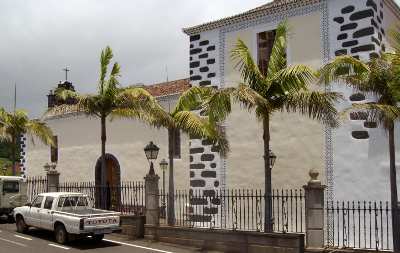
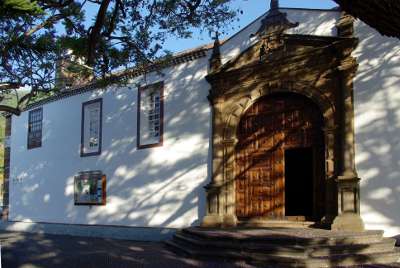
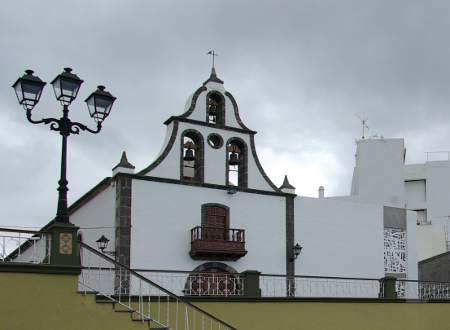
The church of San Juan, Puntallana
The exterior of the church of San Juan, Puntallana

As Palmeran churches go, the church of St. John the Baptist in Puntallana isn't all that old. The presbytery and the side chapels date from the 16th century, and the nave from the 1719. It was officially declared an Asset of Cultural Interest (rather like a listed building) in 1994.
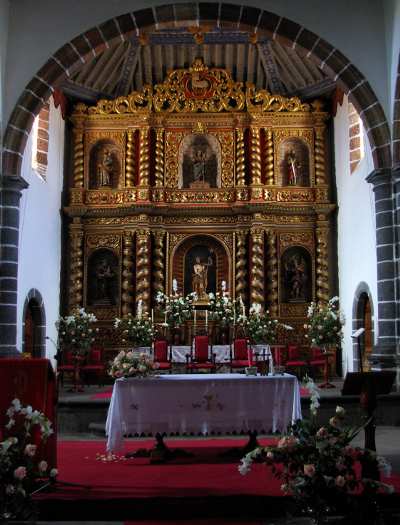
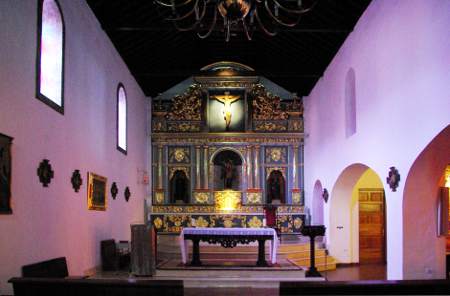
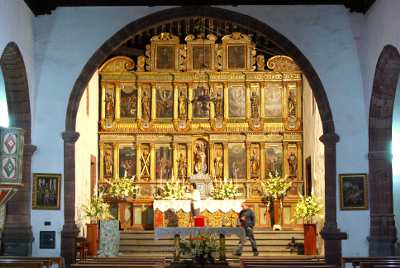
The main altar in the church of San Juan, Puntallana

The inside of the church is beautiful.
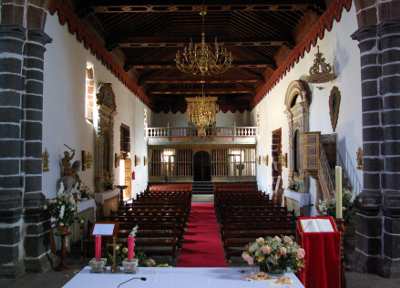
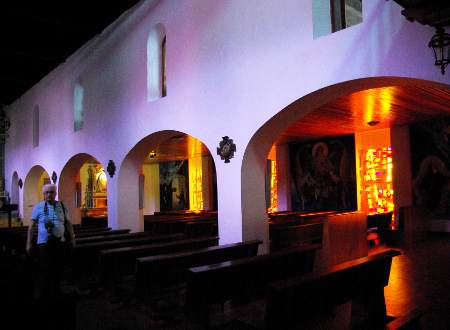
The nave in the church of San Juan, Puntallana

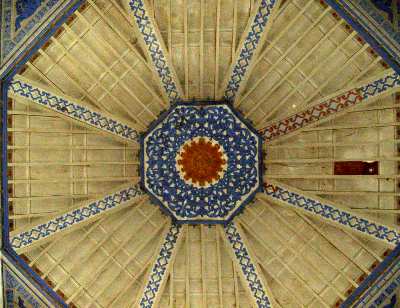
The oldest churches on La Palma were built by people who moved from what is now Andalusia, which has only recently been reconquered from the Arabs. The style is known as "Mudejar" which means "those allowed to stay." And this church has a beautiful mudejar ceiling.
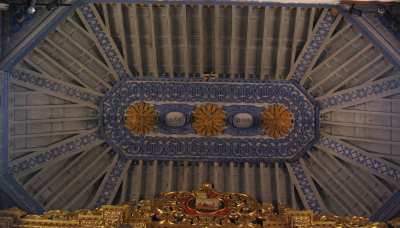
The ceiling in the church of San Juan, Puntallana
The ceiling in the Presbytery

The ceiling in the church of San Juan, Puntallana
The ceiling in the crossing


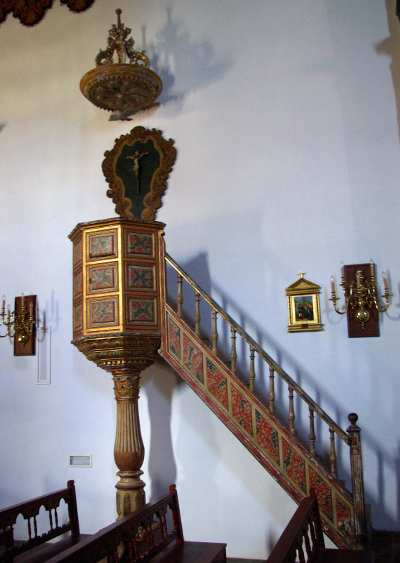
The pulpit in the church of San Juan, Puntallana
The pulpit

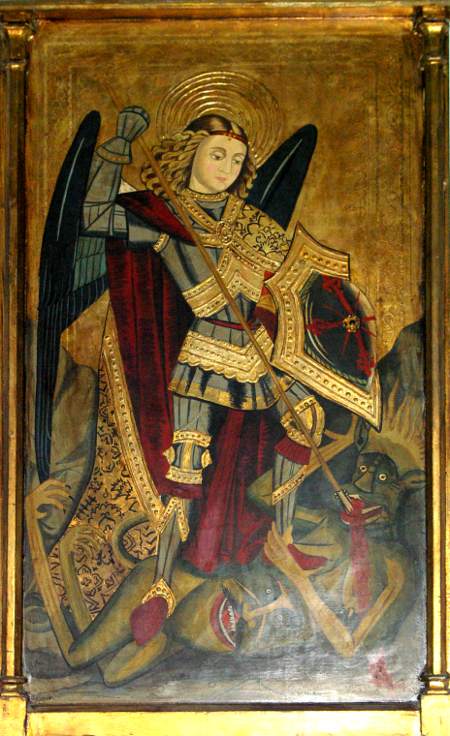
The church houses lots of statues. This one, of St. Michael the Archangel, was made by Benito de Hita y Castillo in the 18th century. You get a lot of statue of St. Michael on La Palma, because Alonso Fernández de Lugo, who led the conquest in 1493, saw St Michael as his ally in a crusade to bring the poor benighted natives into the Catholic church. (I can't help thinking they might have seen the whole thing rather differently, especially since the conquest involved killing or enslaving so many of them, and taking all the best land away from the rest.)
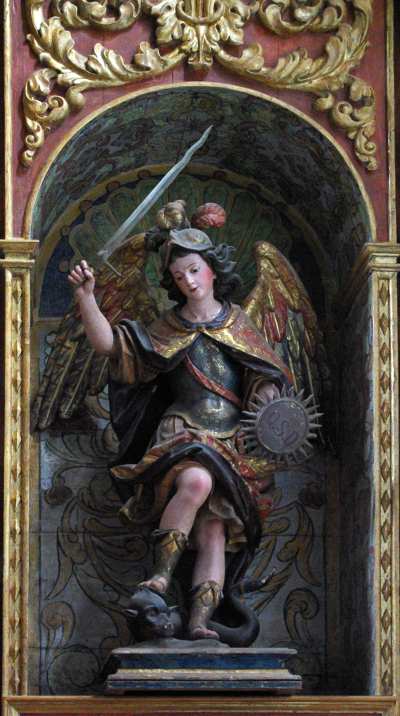
The church of San Juan, Puntallana
St Michael Archangel

Labels: , ,

Bookmark with:

Del.icio.us Digg Reddit Facebook Furl It Newsvine StumbleUpon ToolbarStumbleUpon

Tuesday, 17 May 2011

Las Nieves

Las Nieves church, Santa Cruz de la Palma

I can't believe that I haven't written about Las Nieves church before.

Las Nieves is a pretty hamlet, in the municipality of Santa Cruz, but about 2 km outside it as the crow flies. If you're fairly fit, there's a pretty (but rough and steep) footpath between the two.


Las Nieves church, Santa Cruz de la Palma


More importantly, Las Nieves has the most gorgeous church on the island. It's also the oldest one, dating from at least 1423 (they had missionaries here before the conquest in 1493). I'm sure the current building must be newer, if only because of its size. It's a very popular place to get married.

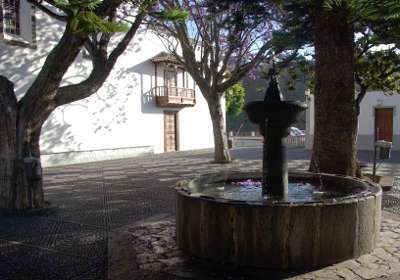
The fountain outside Las Nieves church, Santa Cruz de la Palma

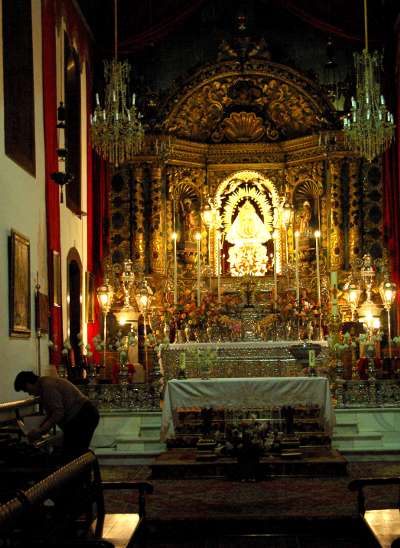
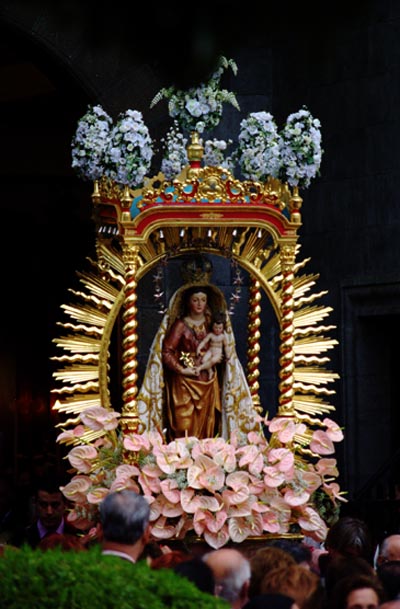
Our Lady of the Snows (the Virgin Mary) is the patron saint of the island, and statue of the her is painted terracotta, from the 15th century. The throne she stands on is marble covered with silver. (It's not too clear in the photo, but it's the thing behind the altar with all the flowers on it.)

Every five years the island has a massive fiesta where the statue of the Virgin comes down to Santa Cruz for five weeks. First they bring down the throne, which separates into 12 pieces (which are still darned heavy). That isn't so much a religious procession as a party, five miles long. Some people are staggering by the time they reach Santa Cruz. Then, a week later, they bring down the statue of the Virgin, which is a much more solemn ocassion.

Interior of Las Nieves church, Santa Cruz de la Palma

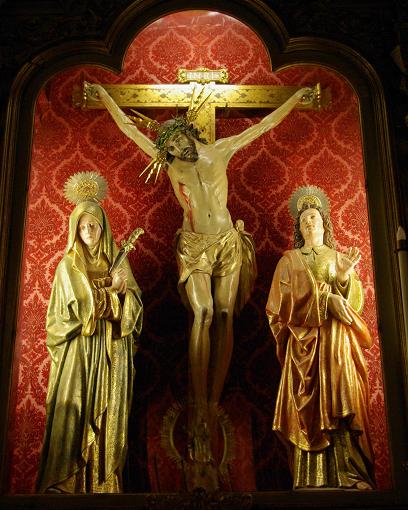
The Calvary statues are from the middle of the 16th century, and really beautiful.


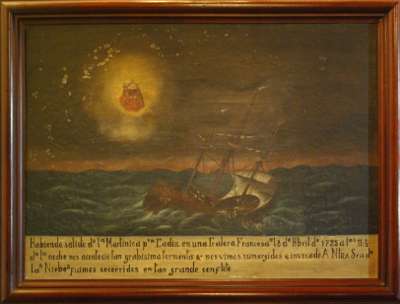
There are also four paintings in the church, given as thanks for miraculous rescues from storms at sea.

Painting in Las Nieves church, Santa Cruz de la Palma

>Visiting hours: Mondays to Sundays from 8 am to 8 pm.

Labels: , ,

Bookmark with:

Del.icio.us Digg Reddit Facebook Furl It Newsvine StumbleUpon ToolbarStumbleUpon

Tuesday, 27 July 2010

Fiesta in Breña Baja

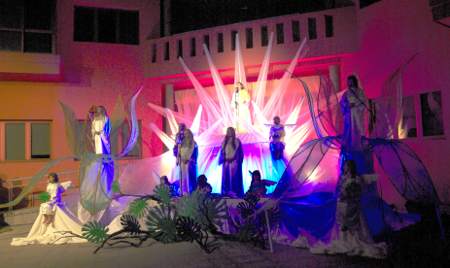
The Paean to St Anne, San José town hall, Breña Baja, La PAlma, Canary IslandsThe Paean to St Anne, San José town hall, Breña Baja

Rather confusingly, the main fiesta in San José (the capital of Breña Baja) isn't St Joseph's Day, it's the feast of Santiago and Santana (St James and St Anne) on the 25th and 26th of July, respectively. Since we've just had the bajada, the fiesta is a much quieter affair than usual. They just did the religious part: a special mass, a procession, and a loa.

So what's a loa, when it's at home?

It's a hymn of praise, usually to a saint. The one in San José is quite short, but beautiful. They built a special stage outside the town hall and hired a professional team for lighting and sound.

I was told that the loa would take place at about 9:45 pm, but the procession was delayed.

And at 10 pm the sprinklers in front of the town hall came on, irrigating the power supply for the sound and light, which started to smoke. Of course the sound-and-lighting guys dashed over and dragged their equipment clear (making a few not-terribly-religious comments under their breath as they did so.) For a while, they were very busy with towels and hair-dryers, and amazingly, they had it all working again five minutes before the procession arrived.

And the concert was lovely.

Labels: , ,

Bookmark with:

Del.icio.us Digg Reddit Facebook Furl It Newsvine StumbleUpon ToolbarStumbleUpon

Thursday, 4 March 2010

Tazacorte Church

The outside of the church of St Michael the Archangel, TazacorteThe outside of the church of St Michael the Archangel, Tazacorte

On Thursday I was in Tazacorte, so I popped into the church. I'm not religious, but most of the churches on La Palma are beautiful, and worth at least a quick look. Even if the building itself isn't special, there's often a beautiful renaissance statue. In this case, I'd recently translated a text that said the church "was built at the end of the 15th century, making it the oldest religious building on the island. It has been restored, enlarged and altered on several occasions."


The old nave in Tazacorte churchThe old nave in Tazacorte church

Sure enough, this nave is very like most of the old churches on La Palma, with whitewashed walls, semi-circular arches, and a lovely coffered ceiling and baroque altar-piece.

The new nave of Tazacorte churchThe new nave of Tazacorte church

And this is the other nave! They weren't kidding about " restored, enlarged and altered" were they? I haven't been able to find out a definite date, but the style looks like the 1960s or 1970s.

The amazing thing is that the combination looks great. The architect must be a genius. I'm sure that if I tried to put a 1960s nave next to a 1490s nave, the result would be a right dog's breakfast.

Standing in the old nave of Tazacorte church, looking towards the new naveStanding in the old nave of Tazacorte church, looking towards the new nave.


So I tried to work out why the two very different nave look as though they belong to each other. Well, they both have white-washed walls, and the same floor and pews. They're joined by semi-circular archways, which are common in the old churches here. Both have wooden ceilings, although the new one is lower, lighter, and simpler. So I sort-of see why it works. but I still say the architect is a genius.

And yes, there's a very old painting of St Michael the Archangel defeating the devil.

Old painting of St Michael in Tazacorte churchOld painting of St Michael in Tazacorte church

Labels: , , ,

Bookmark with:

Del.icio.us Digg Reddit Facebook Furl It Newsvine StumbleUpon ToolbarStumbleUpon

Thursday, 18 June 2009

The Best Baroque Altarpieces in the Canary Islands

The

This is the main altarpiece in The church of Our Lady of Candelaria (Iglesia de Nuestra Señora de Candelaria) in Tijarafe. According to the books, it's the best baroque altarpiece in the Canary Islands. It's certainly gorgeous, and huge.

It was made by Antonio de Orbarán, and he worked on it from 1626 to 1628. It cleverly combines niches with statues and painted panels.

The church itself was built around 1530, but various enlargements and renovations went on from 1571 until the start of the 18th century.

Mass is held on Fridays, Sundays and public holidays at 17.30 (in summer, at 18.30) but the church seems to be open most of the time. Take the main road around the north of the island, detour into the centre of Tijarafe (just above the main road) and you'll find the church easily.

Labels: , ,

Bookmark with:

Del.icio.us Digg Reddit Facebook Furl It Newsvine StumbleUpon ToolbarStumbleUpon

Friday, 5 June 2009

Flemish Art


16th century Calvary in the church of Las Nieves

When La Palma was conquered (or invaded, depending on your point of view) in 1493, the Spanish empire also included what is now Portugal, Belgium and Holland. So settlers arrived from all these countries, quite often with surnames like Groenenberg or Van de Walle. Some of them became very rich, and spent a lot of money on their local churches. they used local builders, but the statues of saints were mostly imported from the Low Countries. This was the Renaissance, the time of Michelangelo, and not that long before Rembrandt. Many of these statues are gorgeous, even if you're not religious.

Most of them are carved from wood, and then painted to look very lifelike indeed. And you don't just find them in the bigger churches. Quite often, villages had much bigger populations in the past, and little out-of-the-way churches have amazing statues.

Our Lady of Monserrat, Los Sauces

Labels: ,

Bookmark with:

Del.icio.us Digg Reddit Facebook Furl It Newsvine StumbleUpon ToolbarStumbleUpon