A small rock in the Atlantic

All about the island of La Palma, in the Canaries.

Click for La Palma, Canary Islands Forecast

Friday, 3 June 2011

Geckos on La Palma


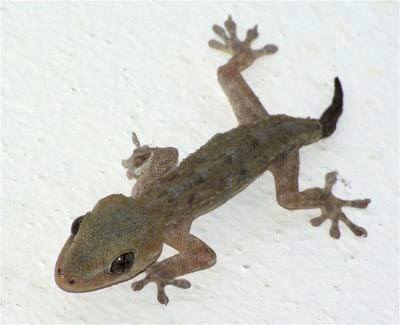
This is a gecko (Tarentola delalandii). They're quite common in La Palma. You find them in warm buildings or on sunny walls outside, and this one lives in my house. I think he must have got too close to one of my cats because his tail's regrowing. You see, if they're in serious danger of being eaten, their tails come off and provide a wriggling decoy while the gecko runs away.

He spent most of yesterday on this smooth vertical wall. They can walk across ceilings too, like Spiderman. I think he might have been asleep, since he never moved, although it's hard to tell because they don't have eyelids. I rather like to have him around, because they eat insects, including mosquitoes. When they hunt, they stalk the insect slowly until they get close enough, then the tongue flicks out and grabs the unfortunate bug, and that's that.

The really surprising thing about them is their call. It sounds like the chuckle of a mad axe-murderer, which is quite alarming when you're alone in the house and you haven't a clue what it is.

But of course you aren't in any danger at all - unlike the geckos. They're on the red list of threatened species.

Labels: ,

Bookmark with:

Del.icio.us Digg Reddit Facebook Furl It Newsvine StumbleUpon ToolbarStumbleUpon

Wednesday, 7 May 2008

Cochineal and Prickerly Pears


In the 1850s the export market for Palmeran wine collapsed, and somebody had the bright idea of going into cochineal production. Before the advent of synthetic dyes, this was far and away the best red dye available, particularly for wool. For one thing, it doesn't fade.

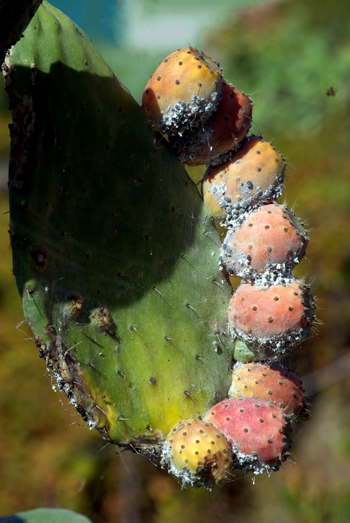
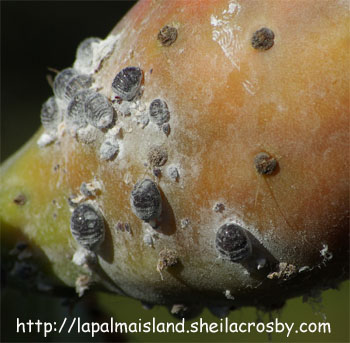
Cochineal is made from a parasitic insect (Dactylopius coccus), which lives on prickly pears (tuneras), so the plants and insects were imported from Mexico. In this climate, prickly pears grow without needing any special attention. In fact they have a tendency to take over your garden if you don't fight back. The insects thrive on neglect, too.

Peasants collected the pale gray females, which were then dried and ground up to produce the dye. Although collecting the insects was labour intensive, soon it was the mainstay of the island's economy.

And then some rotten so-and-so invented synthetic alizarine dye, which was much cheaper. The bottom fell out of the cochineal market.

There's still a small market for cochineal, because it's safe to use in food and cosmetics. And of course you can eat the prickly pears. They're harvested using giant wooden tongs, and eaten with a knife and fork, to avoid the spines.

Labels: , , , , , , , ,

Bookmark with:

Del.icio.us Digg Reddit Facebook Furl It Newsvine StumbleUpon ToolbarStumbleUpon